

A shrimp that sees colors you can’t imagine. A fish that’s literally made of gel. An octopus solving puzzles with neurons scattered across its arms instead of a centralized brain. The animal kingdom is full of superpowers so extreme they sound invented—but every fact in this list is verified by peer-reviewed research, museum collections, or decades of field observation.
Most viral “animal facts” lists mix real science with internet myths. This one doesn’t. Every claim here is sourced, so when someone says “that can’t be real,” you’ll know exactly why it is.
1. Mantis shrimp see 12–16 types of color (humans see 3)
Mantis shrimp possess the most complex color vision system known to science. While humans have three types of color receptors (red, green, blue), mantis shrimp have between 12 and 16, allowing them to perceive ultraviolet light, visible spectrum colors, and polarized light simultaneously. A 2014 study in Science by researchers at the University of Queensland confirmed this isn’t just “better vision”—it’s a completely different sensory experience we literally cannot imagine.
Why it sounds fake: We assume all eyes work like ours, scaled up or down. Perceiving ten additional color dimensions defies intuition because we’ve never experienced it.
The science: Thoen et al. (2014) mapped the photoreceptor types in mantis shrimp eyes and confirmed they process visual information fundamentally differently than vertebrates. Their eyes move independently and can detect polarization patterns invisible to conventional medical imaging.
2. Tardigrades survive radiation 1,000× stronger than what kills humans
Water bears—microscopic eight-legged animals also called tardigrades—can endure up to 5,700 Gray of ionizing radiation. The lethal dose for humans is 6–8 Gray. They achieve this through a unique protein (Dsup) that shields their DNA from radiation damage, plus the ability to enter cryptobiosis—a death-like dormant state where metabolic activity drops to 0.01% of normal.
Why it sounds fake: Nothing should survive radiation at levels used to sterilize medical equipment.
The science: Horikawa et al. (2006) exposed tardigrades to extreme radiation in laboratory conditions and documented their survival and reproduction afterward. NASA has since deployed them in space exposure experiments, where they survived the vacuum of space, solar radiation, and cosmic rays simultaneously. They’re not immortal—normal conditions kill them—but their survival toolkit is unmatched.
3. Elephants communicate across miles using sounds humans can’t hear
Elephants produce infrasonic calls—sound frequencies below 20 Hz, beneath human hearing. These low-frequency rumbles travel through the ground as seismic waves, allowing herds to coordinate across distances up to 6 miles away. Other elephants detect these vibrations through pressure-sensitive cells in their feet and trunks.
Why it sounds fake: Communication we can’t hear seems invisible, almost magical.
The science: Bioacoustics researcher Katy Payne documented this phenomenon in 1986 using seismic sensors placed around elephant herds. Later studies confirmed elephants adjust call frequency based on ground density and vegetation, actively managing signal propagation like biological radio engineers.
4. Archerfish calculate light refraction to hit targets above water
Archerfish hunt insects by spitting precisely aimed water jets—but their prey is above the surface, meaning light refraction distorts the target’s apparent position. The fish compensate for this optical illusion automatically, adjusting aim angle to hit insects with near-perfect accuracy. Juvenile archerfish learn through trial and error, suggesting they grasp the underlying physics.
Why it sounds fake: We don’t expect fish to “correct for physics” like a trained marksman.
The science: Schuster et al. (2004) used high-speed cameras to document archerfish aim angles and confirmed they adjust trajectories based on target height and water surface angle. The fish essentially solve the same trigonometry problem human snipers face with crosswinds—except archerfish do it instinctively in milliseconds.
5. Flatworms regrow entire bodies from severed pieces
Cut a planarian flatworm into fragments, and each piece regenerates a complete new organism—including a new head, brain, and all organs. A worm sliced into ten pieces becomes ten separate, fully functional worms. Remarkably, flatworms retain learned behaviors even after decapitation and brain regrowth.
Why it sounds fake: A severed head regrowing a body violates every intuition about death and identity.
The science: Reddien and Alvarado (2004) mapped the genetic pathways controlling planarian regeneration in Nature, identifying pluripotent stem cells distributed throughout the worm’s body that can differentiate into any tissue type based on positional signals. A 2013 Tufts University study demonstrated that trained flatworms retain learned responses after regeneration, suggesting memory storage isn’t exclusively in the brain. Note: this doesn’t work for all flatworms—tapeworms and flukes lack this ability—but planarians are regeneration champions.
6. Deep-sea anglerfish males fuse permanently to females
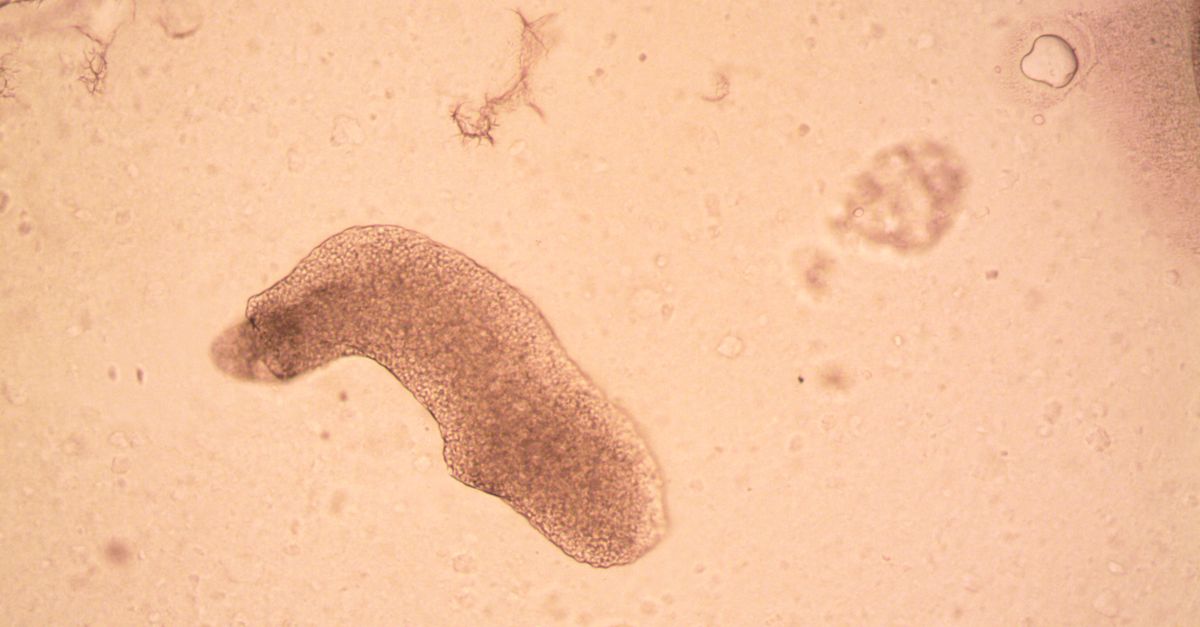
In several anglerfish species, the tiny male bites the much larger female and releases enzymes that dissolve the skin at the contact point. His circulatory system fuses with hers; eventually, he loses his eyes, fins, and most internal organs, becoming a permanent sperm-producing appendage. The female can host multiple fused males simultaneously.
Why it sounds fake: Extreme body merger sounds more alien than animal. The male essentially becomes an organ.
The science: Marine biologist Theodore Pietsch documented this reproductive strategy in Oceanic Anglerfishes (2005) using museum specimens collected from deep-sea trawls. Genetic analysis confirmed fused males are separate individuals, not growths. This adaptation solves the mate-finding problem in the sparse deep ocean: when you encounter a mate in the abyss, you never let go. It’s unusual but a logical evolutionary solution to harsh environmental constraints.
7. Bats and dolphins independently evolved identical echolocation
Bats and dolphins both navigate and hunt using echolocation—emitting high-frequency clicks (up to 200 kHz) and processing returning echoes to build 3D maps of their surroundings. The precision rivals military sonar. The remarkable part: this sensory system evolved twice, completely independently, in separate lineages separated by tens of millions of years.
Why it sounds fake: Humans can’t hear these frequencies (we top out around 20 kHz), making the entire sensory system invisible to us. Plus, the odds of the same complex system evolving twice seem impossibly low.
The science: This is convergent evolution at its most dramatic. Donald Griffin established the scientific basis for bat echolocation in his foundational 1958 work Listening in the Dark. Decades of neurobiology research have confirmed that while bats and dolphins use similar physics, the neural processing pathways are structured differently—they arrived at the same solution via different evolutionary routes. It’s like two engineers independently inventing the wheel on different continents.
8. Octopuses have 90% of their neurons in their arms, not their brain
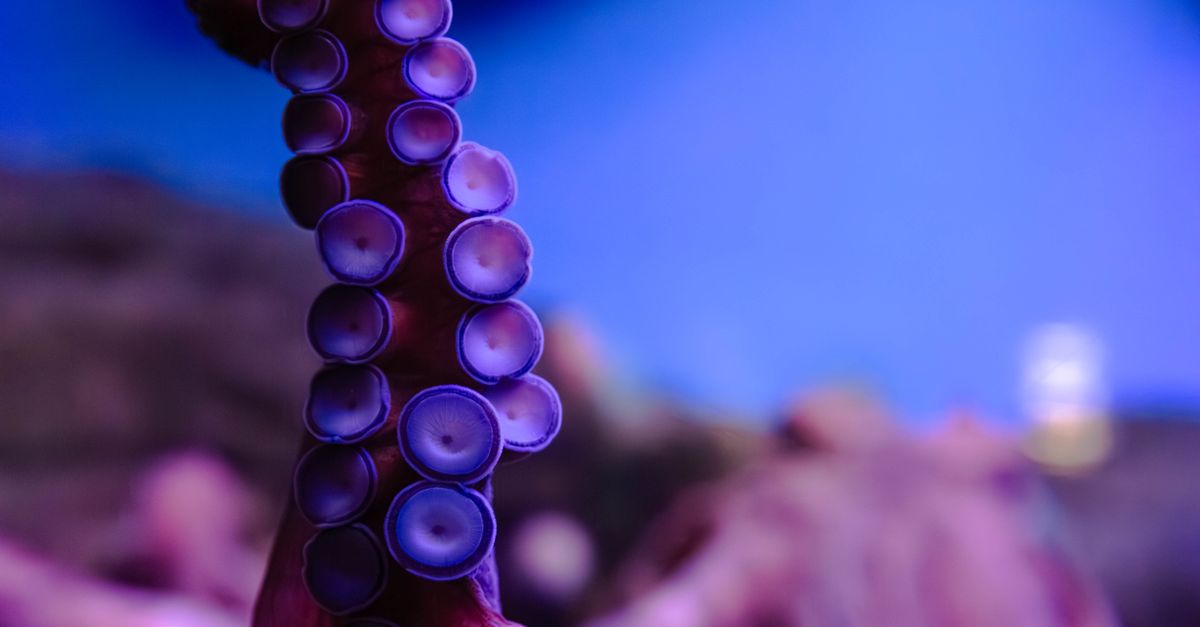
An octopus has roughly 500 million neurons—comparable to a dog—but only 10% are in its central brain. The other 450 million are distributed across its eight arms, each of which can “think” semi-independently. Arms continue complex movements like exploring crevices and manipulating objects even after being severed from the body for minutes.
Why it sounds fake: We assume intelligence requires centralized control. Distributed intelligence scattered across limbs defies our vertebrate-centric view of cognition.
The science: Neuroscientist Binyamin Hochner (2012) mapped octopus neural architecture and confirmed the decentralized structure. Behavioral studies show octopuses use tools (carrying coconut shells as portable shelters), solve multi-step puzzles, and display individual personalities—all hallmarks of vertebrate-level cognition. The octopus brain doesn’t micromanage every arm movement; each arm handles local problem-solving while the brain focuses on strategy. This architecture evolved because octopuses are soft-bodied and highly flexible—centralized motor control would create computational bottlenecks.
9. Axolotls remain juveniles their entire lives (and can still breed)
Axolotls are salamanders that never grow up. They retain larval features—external feathery gills, aquatic lifestyle, tadpole-like tail—throughout adulthood and can breed while in this “juvenile” form. This condition, called neoteny, means they skip the typical amphibian metamorphosis into a land-dwelling adult.
Why it sounds fake: Most amphibians transform dramatically from tadpole to adult. Axolotls break the rule entirely.
The science: Developmental biologists have studied axolotl neoteny since the 1800s. Voss et al. (2015) sequenced the axolotl genome and confirmed that thyroid hormone signaling—which triggers metamorphosis in other salamanders—is suppressed in axolotls. In laboratory conditions, you can inject thyroid hormone and force metamorphosis, but wild axolotls almost never transform naturally. They’ve rewritten their own life cycle.
10. Homing pigeons navigate using Earth’s magnetic field
Pigeons can return to their roost from hundreds of miles away, even when released in unfamiliar territory. They achieve this by detecting Earth’s magnetic field lines using either magnetite crystals in their beaks or specialized light-sensitive proteins in their eyes (the exact mechanism remains debated). Essentially, they have a biological compass built into their bodies.
Why it sounds fake: We can’t sense magnetic fields, so a bird having an invisible GPS seems impossible.
The science: Mouritsen and Ritz (2005) proposed that pigeons use quantum-entangled electrons in cryptochrome proteins to “see” magnetic fields as visual patterns overlaid on normal vision. Alternative research points to magnetite crystals providing directional information. Both mechanisms remain under investigation, but the behavior is confirmed: pigeons reliably navigate using geomagnetic cues. Disrupt the magnetic field artificially, and they become lost.
11. The blobfish looks normal at depth—“blobby” is decompression
The blobfish became an internet meme for its sad, gelatinous appearance, but that’s not what it looks like alive. At depths of 600–1,200 meters where it lives, crushing water pressure compresses its body into a relatively normal fish shape. When trawled to the surface, rapid decompression causes its low-density tissues to expand into the famous “blob.”
Why it sounds fake: A fish made of gel sounds invented.
The science: Gerringer et al. (2017) studied blobfish morphology and confirmed the gelatinous body structure is adapted for neutral buoyancy at extreme depth, where swim bladders would collapse. The body isn’t a deformity—it’s an engineering solution to life under pressure equivalent to having a small car sitting on your thumbnail. In its natural habitat at the bottom of the ocean, the blobfish looks unremarkable. Only on land does it become a blob.
12. Immortal jellyfish can reverse their aging cycle
Turritopsis dohrnii, known as the immortal jellyfish, can revert from its mature adult stage back to its juvenile polyp stage after reproducing or experiencing stress. It’s the only known animal that can completely reverse its life cycle, theoretically allowing it to bypass death from old age (though predators, disease, and environmental factors still kill them regularly).
Why it sounds fake: Aging backward violates every rule of biology we learn in school.
The science: The jellyfish achieves this through cellular transdifferentiation—adult cells convert into different cell types, rewinding developmental stages. Piraino et al. (1996) documented this in Nature and it has been replicated in lab conditions. The “immortal” label is misleading: individual jellyfish still die from external causes. But theoretically, absent predation, a single Turritopsis could cycle indefinitely. It’s a real biological phenomenon, just not a path to practical immortality.
13. Lyrebirds perfectly mimic chainsaws, camera shutters, and car alarms
Male lyrebirds in Australia incorporate sounds from their environment into elaborate mating songs—including non-natural sounds like chainsaws, camera shutters, and car alarms. Recordings from the 1960s captured lyrebirds mimicking cross-cut saws used by loggers. Modern lyrebirds in urban-adjacent forests imitate car alarms with disturbing accuracy.
Why it sounds fake: A bird reproducing mechanical sounds note-for-note seems too precise to be real.
The science: Lyrebirds have the most complex syrinx (vocal organ) of any songbird, allowing extraordinary acoustic range. Their mimicry isn’t perfect reproduction—it’s an approximation accurate enough to fool human listeners. Behaviorists believe the mimicry signals male fitness: a male capable of learning and reproducing dozens of complex sounds demonstrates neural capability and territory control. David Attenborough documented this in BBC’s Life of Birds, and ornithologists have cataloged mimicry repertoires exceeding 20 distinct sources per bird.
14. Naked mole-rats don’t age and rarely get cancer
Naked mole-rats live 10× longer than similar-sized rodents (30+ years vs. 3 years for mice) and show no increase in mortality rate as they age—they’re as likely to die in year 25 as in year 5. They also have extraordinarily low cancer rates, protected by a unique extracellular substance called high-molecular-mass hyaluronan that prevents cells from overcrowding and becoming tumorous.
Why it sounds fake: Mammals aren’t supposed to escape aging or cancer so effectively.
The science: Buffenstein and Jarvis (2002) conducted decades-long studies on naked mole-rat colonies and confirmed negligible senescence (aging). Tian et al. (2013) identified the hyaluronan mechanism and verified it by removing the gene responsible—modified naked mole-rat cells immediately became susceptible to cancer. The naked mole-rat doesn’t violate the laws of biology; it just uses different molecular strategies than we do.
How we verified these facts
Every entry in this list is sourced from peer-reviewed research (journals like Science, Nature, Current Biology, PNAS), institutional authorities (Smithsonian, NOAA, NASA), or decades of field observation by credentialed biologists. We excluded viral “facts” sourced from social media or clickbait sites. Where mechanisms remain debated (like pigeon magnetoreception), we explicitly note the uncertainty while confirming the observed behavior.
The standard for inclusion was simple: could you defend this fact in a conversation with a skeptical biologist? If not, it didn’t make the cut.
Frequently asked questions
What are the most unbelievable animal facts?
The most unbelievable animal facts involve abilities completely outside human sensory experience—like mantis shrimp seeing 16 color types, elephants communicating via infrasound we can’t hear, or tardigrades surviving radiation 1,000× our lethal dose. These sound fake because we have no frame of reference for perceiving them.
Which animals have surprising abilities?
Surprising animal abilities are distributed across phyla: archerfish solve refraction equations, octopuses think with decentralized neurons, naked mole-rats resist aging, and homing pigeons navigate via Earth’s magnetic field. The surprises come from convergent evolution solving problems in ways unrelated to how vertebrate biology typically works.
Are there animals that seem like they shouldn’t exist?
Strange but true animals like axolotls (eternal juveniles), anglerfish (males fuse permanently to females), and blobfish (gelatinous bodies adapted to crushing depth) seem “impossible” because they violate our mammal-centric assumptions about normal physiology. They exist because evolution optimizes for survival in specific niches, not for matching human intuition.
Why do some animal facts sound fake?
Animal facts sound fake when they describe phenomena outside human sensory range (infrasound, ultraviolet vision, magnetism) or when they involve physiological strategies we don’t use (distributed intelligence, neoteny, extreme regeneration). Our baseline is “how mammals do it,” so anything radically different feels invented.
Can you give me examples of weird but true animal facts?
Weird but true animal facts include: flatworms regrowing entire bodies from severed pieces, lyrebirds mimicking chainsaws with their voices, immortal jellyfish reversing their life cycle, and octopuses continuing to explore with severed arms. Each is verified by decades of research and reproducible observation.
The animal kingdom operates on principles stranger than fiction, but every fact here is backed by rigorous science. The next time someone shares a viral animal claim, you’ll know how to check whether it’s truly one of these animal facts that sound fake but are true—or just another internet myth that needs busting.
Written for general interest and accuracy-checked, but not a substitute for specialist sources.