
What's the Closest Black Hole to Earth?
The closest known black hole is Sagittarius A*, 26,670 light-years away at our galaxy's center—but invisible stellar black holes likely lurk much closer.
Wait, really? — the good kind of rabbit hole
Wait, really? — the good kind of rabbit hole
The closest known black hole is Sagittarius A*, 26,670 light-years away at our galaxy's center—but invisible stellar black holes likely lurk much closer.

The biggest whale is the blue whale, reaching 110 feet and 200 tons—the largest confirmed animal known to exist. Here's how they got so massive and why it matters.

Most penguin facts you've heard are half-truths or myths. Here's what science actually tells us about penguin species, swimming speed, diet, and evolution.
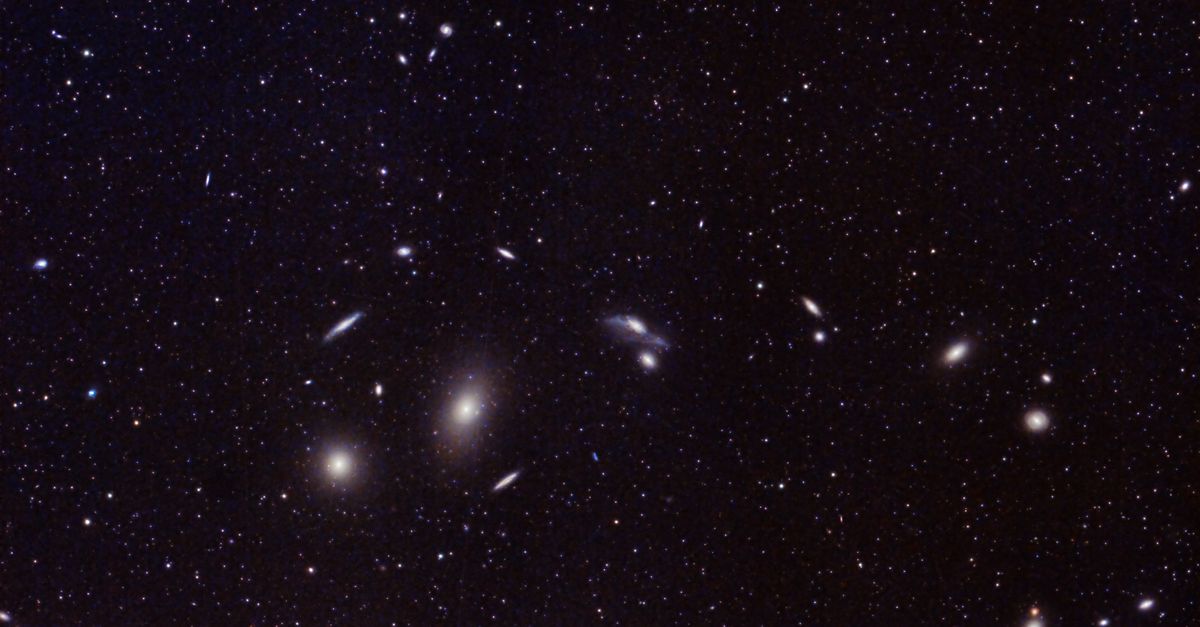
The biggest black hole known is Holm 15A at 170–310 billion solar masses, but measurement uncertainty means the title keeps changing. Here's why.

Only 72 Javan rhinos remain, all in one Indonesian park. Why biology itself—not just poaching—makes this the world's hardest species to save.

The golden-crowned flying fox holds the record for wingspan at nearly 6 feet, but the largest bat by weight is actually a different species. Here's the full story.
Supermassive black holes are millions to billions of times heavier than the Sun. Sagittarius A*, the Milky Way's black hole, sits 26,673 light-years away—massive

Dreams vanish within minutes of waking because your brain chemistry shifts dramatically—depleting the neurochemical needed to lock memories in place.

Squid change color in 200-400 milliseconds using chromatophores—pigment cells controlled directly by their brain. Here's how one of nature's fastest color-change systems
Blue whales call at 15 Hz and can be heard 5,000 km away. Here's how underwater sound, ocean physics, and whale migration make ocean-spanning communication possible.

Why do some people need less sleep? A rare genetic mutation allows 1-3% of people to thrive on 5-6 hours nightly. Here's how sleep genetics really work.

The placebo effect triggers real brain changes via dopamine and opioid release, even when patients know they're taking a fake pill. Here's the science behind it.

How do mushrooms grow? They develop in four stages: spore germination, mycelium growth, pinning, and fruiting—often in just 7-14 days. Here's the full lifecycle.

Astronauts adapt to weightlessness in 1-2 weeks through neurological compensation, not biological change. Fluid shift, nausea peak in 72 hours. Full story inside.

Some trees live thousands of years because they grow incredibly slowly—and slow growth means less cellular damage. Learn the biology behind ancient bristlecone pines.

Fireflies produce light through a chemical reaction: luciferin, luciferase, ATP, and oxygen create cold light with near-perfect efficiency for species-specific mating

From golden-eyed hawks to mirror-like shark eyes, animal eye colors reveal hunting strategies, light adaptation, and evolutionary trade-offs—not just genetics.

Octopuses solve puzzles using 500 million neurons—two-thirds in their arms, not their brain. Here's how their distributed intelligence works differently.

The placebo effect produces measurable pain relief and symptom reduction through real neurochemical changes — brain scans prove it's not just 'in your head.'

Ball lightning is a rare glowing sphere that appears during thunderstorms. Learn what science knows about its color, size, duration, and the plasma theories with lab