

In 2022, researchers at Harvard Medical School handed patients with irritable bowel syndrome a bottle of pills and told them plainly: these pills contain no active ingredients whatsoever. The patients knew they were swallowing sugar. They still got better—40% reported clinically significant symptom relief. The brain doesn’t need to be fooled to respond to treatment. It just needs the ritual.
The short answer
The placebo effect is caused by measurable neurobiological changes in the brain triggered by expectation, conditioning, and the social ritual of receiving care. Your brain releases real dopamine and endogenous opioids in response to anticipated relief, activating the same pain-control circuits as actual medication—even when you know the treatment is fake.
The brain’s pharmacy: dopamine, opioids, and pain control
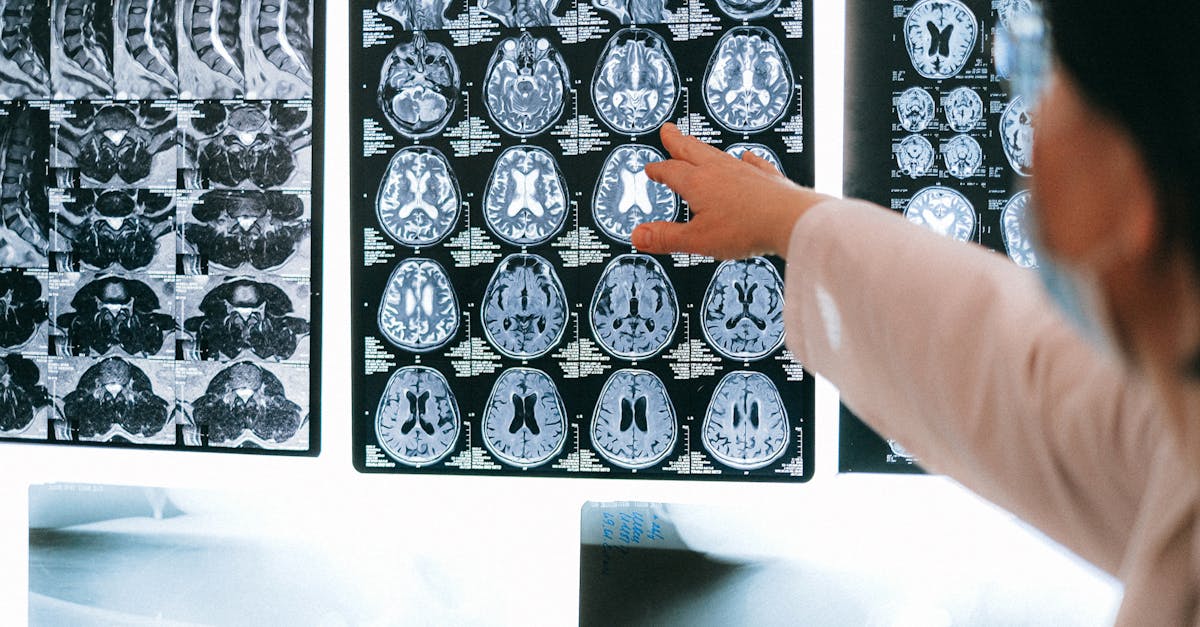
Here’s what brain imaging has shown: when patients expect pain relief from a placebo, PET scans light up the same regions that fire during real painkiller administration. The anterior cingulate cortex (your brain’s pain-processing hub), the nucleus accumbens (reward center), and the prefrontal cortex all activate. The brain floods these areas with dopamine—the reward chemical that says “relief is coming”—and releases endogenous opioids, your body’s homemade morphine.
This isn’t metaphor. In a 2002 landmark study published in PNAS, neuroscientist Fabrizio Benedetti demonstrated that the opioid-blocker naloxone erases placebo pain relief. If you block the brain’s opioid receptors, the placebo stops working. The effect isn’t “in your head” in the dismissive sense; it’s in your head in the literal, neurochemical sense.
Brain imaging from the early 2000s onward confirmed what clinicians suspected: placebos trigger a top-down pain modulation system. The prefrontal cortex—the part of your brain that handles expectation and prediction—sends signals down to the brainstem and spinal cord’s dorsal horn, dampening incoming pain signals before they fully register as suffering. Expectation literally turns down the volume on pain.
Conditioning: why the ritual matters more than the pill
You don’t need conscious belief for this to work. You need a learned association. Pavlov’s dogs salivated at a bell because the bell predicted food. Humans release dopamine at the sight of a doctor’s white coat, the taste of a familiar pill, or the cool swipe of an alcohol prep pad because these cues have been paired, over a lifetime, with relief.
Research published in Nature Reviews Neuroscience showed that repeated pairings of a treatment ritual with actual relief train the nervous system to anticipate healing. After enough cycles, the ritual alone—no active drug required—triggers the cascade. This is classical conditioning meeting clinical trials, and it explains why open-label placebos work at all.
Even the context matters. Placebos delivered by warm, attentive clinicians in calm environments produce stronger effects than identical pills handed over by rushed, impersonal staff. The brain integrates social cues, physical setting, and past experience into a prediction: “This is a healing moment.” The body responds accordingly.
Where placebos work—and where they absolutely don’t
The placebo effect is not a miracle cure. It’s a symptom modulator, and it works best on subjective experiences the brain has direct regulatory control over.
Strong placebo responses (sourced from Cochrane meta-analyses and NIH reviews):
- Chronic pain: 30–60% of patients report clinically meaningful relief
- Irritable bowel syndrome: 40–50% symptom improvement
- Post-operative nausea: 30–40% reduction
- Migraine and tension headaches: 20–40% improvement, especially when prognosis is explained
- Anxiety and panic symptoms: 20–40% response via extinction of threat conditioning
Weak to nonexistent placebo responses:
- Bacterial or viral infections: <5% (placebos do not kill pathogens)
- Broken bones: <5% (no healing acceleration)
- Cancer progression: No effect on tumor growth (though placebos may ease nausea from chemotherapy)
- High blood pressure or cholesterol: Minimal measurable change in objective lab values
The pattern is clear: placebos engage the subjective side of illness—pain, nausea, fatigue, mood—where the brain has levers to pull. They don’t repair tissue, eliminate infection, or reverse objective pathology. A sugar pill will not close a fracture or shrink a tumor, but it can genuinely reduce post-surgical pain or chemotherapy nausea.
The startling truth: placebos work even when you know they’re fake

This finding overturned decades of clinical trial orthodoxy. In a 2022 study published in JAMA and led by researcher Ted Kaptchuk at Harvard, patients with IBS were handed pill bottles clearly labeled “placebo” and told explicitly that the pills contained no active medication. Forty percent still improved.
How? The mechanism isn’t deception—it’s the ritual of care plus conditioned expectation. Even when your conscious mind knows the pill is inert, your nervous system has learned that taking a pill in a medical context predicts relief. The conditioning runs deeper than rational thought. The brain’s prediction machinery doesn’t require you to consciously believe; it just requires the familiar cues.
This has profound implications for clinical trials. The “placebo effect” researchers measure in studies conflates true neurobiological placebo response with natural recovery, regression to the mean, and the simple comfort of being observed and cared for. When trials compare a new drug to placebo, they’re not measuring drug vs. nothing—they’re measuring drug vs. expectation, ritual, attention, and the body’s learned healing responses.
What it means for belief and healing
The placebo effect is proof that psychology and biology aren’t separate systems—they’re the same system viewed from different angles. Expectation is a neurochemical event. Ritual is a learned physiological trigger. The brain doesn’t distinguish between “real” and “fake” medicine the way we do; it distinguishes between “this context predicts relief” and “this context doesn’t.”
This doesn’t make suffering imaginary. It makes the brain a participant in healing, not just a passive observer. Pain relieved by placebo is still pain relieved. The dopamine is real. The opioid release is real. The dampened pain signals are real.
It also means we can’t dismiss treatments as “just placebo” when they help. If open-label placebos reduce IBS symptoms by 40%, that’s a clinically meaningful intervention—one that’s cheap, safe, and transparent. The ethical question shifts from “Is this deceptive?” to “How do we harness this honestly?”
FAQ
Can placebos work if you know they’re fake?
Yes. The 2022 Harvard study on IBS patients showed 40% improvement even when patients were told explicitly they were taking placebo pills. The ritual and conditioning matter more than conscious belief.
Do placebos actually change the brain?
Absolutely. Brain imaging shows placebo treatment activates dopamine pathways, releases endogenous opioids, and dampens pain-processing regions—the same systems triggered by real painkillers.
What’s the difference between placebo effect and natural recovery?
Natural recovery happens on its own timeline. The placebo effect accelerates or amplifies subjective relief (pain, nausea, anxiety) through neurobiological pathways, but it doesn’t heal infections or broken bones.
Are placebos as strong as real medicine?
Not usually. Placebos typically produce 50–70% of the effect of low-dose medications for pain and nausea, but they’re far weaker than high-dose drugs and ineffective for infections or structural damage.
Why do placebos work in clinical trials?
Clinical trials provide ideal placebo conditions: attention, expectation of relief, medical ritual, and conditioning. Trials measure how much more a real drug does beyond this baseline response.
Written for general interest and accuracy-checked, but not a substitute for specialist sources.
For related mind-body phenomena where expectation meets physiology, see Why Do We Blush? The Science Behind This Honest Signal and Why Do We Cry When We Laugh? The Science of Laughter Tears. And if you’re curious what the brain can’t override through expectation alone, Why Do We Get Hiccups? The Reflex That Shouldn’t Exist offers a useful contrast.